MENÚ
ES | EUR

ES | EUR
-
- Todas las centrífugas
- Centrífugas de sobremesa
- Centrífugas de suelo
- Centrífugas refrigeradas
- Microcentrífugas
- Centrífugas multiuso
- Centrífugas de alta velocidad
- Ultracentrífugas
- Concentrador
- Productos IVD
- High-Speed and Ultracentrifuge Consumables
- Tubos de centrífuga
- Placas de centrífuga
- Gestión de dispositivos
- Gestión de muestras e información
-
- Todas las pipetas, dispensadores y manipuladores automatizados de líquidos
- Pipetas mecánicas
- Pipetas electrónicas
- Pipetas multicanal
- Pipetas de desplazamiento positivo y dispensadores
- Puntas de pipeta
- Dispensadores de botella
- Controladores de pipeta
- Accesorios para dispensadores y pipetas
- Pipeteo automatizado
- Consumibles de automatización
- Accesorios de automatización
- Servicios para dispensadores y pipetas
Sorry, we couldn't find anything on our website containing your search term.
Sorry, we couldn't find anything on our website containing your search term.
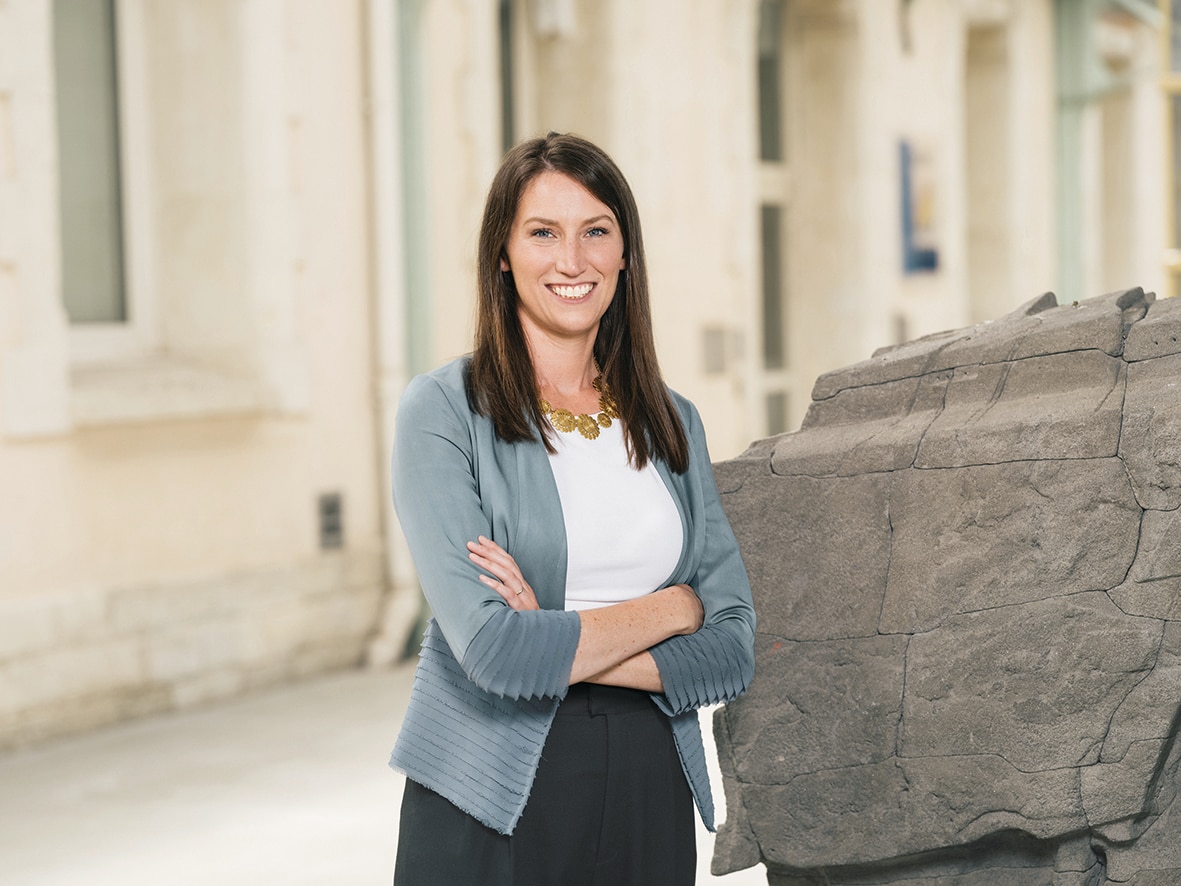
“You Never Know When the Next Breakthrough Will Arrive, or Where It Will Come From”
Exploración de las ciencias de la vida
- Vida en el laboratorio
- Off the Bench
- Bright Minds
Laura Seeholzer is the winner of the 2024 Eppendorf & Science Prize for Neurobiology. Three questions for the American scientist:
Dr. Seeholzer, you identified a group of neuroendocrine cells in the larynx and trachea that protect our airways. What are the consequences of this significant discovery?
Laura Seeholzer: One result first off is a new understanding of chronic, which is to say, persistent and uncontrollable coughing. We’ve found out that rare epithelial cells activate a particular class of sensory neurons, which, in turn, recognize adenosine triphosphate (ATP) and thus trigger coughing.
Interestingly, current treatments are aimed at blocking exactly those ATP-sensitive neurons without even knowing why they’re being overstimulated in the first place. We suspect that the neuroendocrine cells release excessive amounts of ATP during chronic coughing.
I’m excited to study this theory further and to possibly develop new therapies for this extremely debilitating condition.
Laura Seeholzer: One result first off is a new understanding of chronic, which is to say, persistent and uncontrollable coughing. We’ve found out that rare epithelial cells activate a particular class of sensory neurons, which, in turn, recognize adenosine triphosphate (ATP) and thus trigger coughing.
Interestingly, current treatments are aimed at blocking exactly those ATP-sensitive neurons without even knowing why they’re being overstimulated in the first place. We suspect that the neuroendocrine cells release excessive amounts of ATP during chronic coughing.
I’m excited to study this theory further and to possibly develop new therapies for this extremely debilitating condition.
Leer más
Has there ever been an encounter, an experiment or a coincidence in your career that made a lasting impression on you?
It’s hard to name one single moment. Of course, I can remember days when experiments suddenly succeeded and led to new insights. What did have a big influence on my career, though, was the support from my postdoc advisor David Julius, my PhD supervisor Vanessa Ruta, and many other mentors at Rockefeller University and the University of California San Francisco, who all believed in my work. Because there are always setbacks in science, and that’s when it really comes down to your team and mentors.
It’s hard to name one single moment. Of course, I can remember days when experiments suddenly succeeded and led to new insights. What did have a big influence on my career, though, was the support from my postdoc advisor David Julius, my PhD supervisor Vanessa Ruta, and many other mentors at Rockefeller University and the University of California San Francisco, who all believed in my work. Because there are always setbacks in science, and that’s when it really comes down to your team and mentors.
Leer más
If you were to give your work a motto, what would it be?
If you want to make a new discovery, look where the light isn’t shining. But I do have to add: you never really know when the next breakthrough will arrive or where it will come from. That’s why it’s so important for researchers to be supported, so that they can tackle as many diverse questions as possible.
If you want to make a new discovery, look where the light isn’t shining. But I do have to add: you never really know when the next breakthrough will arrive or where it will come from. That’s why it’s so important for researchers to be supported, so that they can tackle as many diverse questions as possible.
Leer más
About Laura Seeholzer: Biologist Laura Seeholzer received her PhD from Rockefeller University in New York and currently works as a postdoctoral fellow at the University of California San Francisco. She studies the role of neuroendocrine cells in protective reflexes of the airway.
Leer más
About the Eppendorf & Science Prize for Neurobiology:
The Eppendorf & Science Prize for Neurobiology promotes and encourages the work of promising neurobiologists under 35. The prize is awarded annually to a young scientist for outstanding contributions to neurobiological research conducted in the last three years and based on methods of molecular, cellular, systems, or organismic biology.
The Eppendorf & Science Prize for Neurobiology promotes and encourages the work of promising neurobiologists under 35. The prize is awarded annually to a young scientist for outstanding contributions to neurobiological research conducted in the last three years and based on methods of molecular, cellular, systems, or organismic biology.
Leer más